

Guide
How to hire tradespeople and local services
Define the job, check licences and insurance, compare written quotes, pay safely and fix problems. With country versions for AU, UK, US, Canada and Ireland.
Updated · 12 min read · By the getme team
1 in 10
Why hiring well matters
Whether you need a cleaner every fortnight, an electrician for a new circuit, a tutor for your teenager or a builder for an extension, hiring someone to work in or on your home is a big decision. Done well, it saves time and stress. Done badly, it can mean poor work, unsafe installations, disputes and lost money.
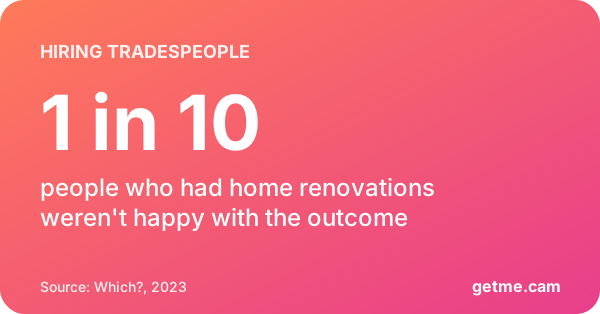
Even careful people get caught out. In 2023, the UK consumer group Which? reported that one in ten people who had home renovations weren't happy with the outcome. Problems usually come down to the same few causes: unclear expectations, no written agreement, paying too much upfront, or hiring someone who isn't qualified for the job.
This guide walks through how to hire well, from defining the job to paying the final invoice, and what to do if things go wrong. It applies to tradespeople (electricians, plumbers, builders, painters, carpenters), home services (cleaners, gardeners, handypeople, removalists) and personal services (tutors, personal trainers, pet sitters). Licensing rules differ by country and region, so we've also written country versions for Australia, the UK, the US, Canada and Ireland, and each European country page lists local checks, for example Germany and France.
Step 1: Define the job clearly
The clearer you are about what you want, the better your quotes and the fewer arguments later.
- Write a short brief. What needs doing, where, by when, and any constraints (access, pets, working hours, parking).
- Take photos and measurements. They help tradespeople give realistic estimates before visiting.
- Separate must-haves from nice-to-haves. It makes it easier to compare quotes and trim the budget.
- Decide who supplies materials. Some people prefer to buy fittings themselves; many tradespeople prefer to supply them so they can guarantee them.
- Think about permits. Structural work, some electrical and plumbing work, and changes to the outside of a building may need approval from your local council or building authority. A good contractor will know, but it's your property and often your responsibility.
On getme you can post a job with a template that prompts you for these details, and you can browse local providers in your area, for example cleaners in Sydney or cleaning in Manchester.
Step 2: Find candidates
Good sources include:
- Personal recommendations from neighbours, friends and colleagues who've had similar work done.
- Local platforms where you can see profiles, past work and reviews. On getme, providers in your area appear first.
- Trade association directories. Many trades have professional bodies with member search tools.
- Your local community: noticeboards, community groups and classifieds.
Aim for at least three candidates for any job worth more than a few hundred in your currency. It gives you a sense of the market price and of how different people would approach the work.
Step 3: Check them properly
This is the step most people skip, and it's the most important.
Identity and business registration
Confirm that the person or business is who they say they are. Most countries have a public business register: Australia has the ABN Lookup, the UK has Companies House, Ireland the CRO, Germany the Handelsregister, the Netherlands the KVK, and so on. Our country pages link to the right register. A registered business isn't automatically a good one, but an unregistered one doing large jobs is a warning sign.
Licences and registrations
In many places, certain work can only legally be done by licensed or registered people. Common examples:
- Gas work almost always requires a registered gas fitter. In the UK, for example, anyone working on gas appliances must be on the Gas Safe Register.
- Electrical work beyond simple tasks usually requires a licensed electrician.
- Plumbing and drainage are licensed in many regions.
- Building work over a certain value often requires a licensed builder, and sometimes insurance that protects you if they go out of business.
Ask for licence numbers and check them on the official register yourself. Don't rely on a photo of a card. Our country versions of this guide list the main registers.
Insurance
Ask whether they hold public liability insurance (which covers damage to your property or injury to others) and, if they have staff, workers' compensation or employer's liability insurance. For larger jobs, ask for a certificate.
Reviews and references
Read reviews, but read them critically. Look for detail ("they fixed a leak under our kitchen sink and cleaned up afterwards") rather than vague praise. A mix of mostly positive reviews with a few honest critiques is often more believable than a perfect score. For bigger jobs, ask for two or three references from recent customers and actually call them. Ask whether the job finished on time and on budget, and whether they'd hire them again.
On getme, we never invent, buy or edit reviews, and providers can't remove honest ones.
Questions to ask before you hire
Keep this list handy when you speak to candidates. Good providers will be happy to answer.
- How long have you been doing this kind of work, and can I see examples?
- Are you licensed or registered for this work? What's the number?
- What insurance do you hold?
- Will you do the work yourself or use subcontractors? Who supervises?
- What's included in the price, and what isn't?
- How do you handle unexpected problems or extra work?
- When can you start, and how long will it take?
- What guarantee do you give on the work?
- How do you prefer to be paid, and when?
- Will you arrange permits and certificates?
Write down the answers and compare them alongside the quotes. How someone answers (clearly and patiently, or vaguely and under pressure) is often as telling as what they say.
Step 4: Get written quotes
A quote should be in writing and specific enough that you can compare it with others. It should include:
- A description of the work and materials.
- The price, and whether it includes tax (GST, VAT or sales tax).
- Whether the price is fixed or an estimate. An estimate can change; a fixed quote shouldn't unless the job changes.
- How variations will be handled and priced.
- A timeline: start date, expected duration and completion date.
- Payment terms: deposit, stage payments and final payment.
- Warranty or guarantee on workmanship and materials.
- Who is responsible for permits, waste removal and clean-up.
Be wary of quotes that are much lower than others. They may leave things out, use cheaper materials, or be designed to win the job and then rise through "variations". Equally, the most expensive quote isn't automatically the best.
Step 5: Agree a contract
For small jobs, an accepted written quote and a few messages confirming details may be enough. For anything significant, use a written contract. In some places, contracts for building work above a set value are legally required to include certain terms. A contract should cover everything in the quote plus:
- What happens if the job runs late.
- How disputes will be resolved.
- Cancellation rights. Some countries give consumers a cooling-off period for contracts signed at home.
- Who holds which insurance.
Keep all communication in writing, or follow up calls with a quick message summarising what was agreed. On getme, messages are kept in your chat history.
Step 6: Pay safely
Payment is where many disputes start.
- Keep deposits reasonable. A modest deposit to cover materials is normal for larger jobs; paying most of the price upfront is risky. Some places cap deposits for building work by law.
- Pay in stages tied to progress, not dates.
- Pay by traceable methods such as bank transfer or card, against an invoice. Cash without a receipt leaves you with no evidence.
- Hold back the final payment until the work is finished and you've checked it.
- Watch for payment-redirection scams. If you receive an email saying a tradesperson's bank details have changed, call them on a number you already have to confirm before paying.
Step 7: During the job
- Be available to answer questions and make decisions.
- Check progress regularly and raise concerns early, politely and in writing.
- Agree variations in writing before the work is done, including the price.
- Keep records: photos, receipts and messages.
Good tradespeople appreciate clients who are clear and decisive. Changing your mind mid-job is your right, but it usually costs time and money.
Step 8: Finishing up
Before paying the final amount:
- Walk through the work with the tradesperson.
- Make a snag list of anything incomplete or not right, and agree when it will be fixed.
- Get certificates and paperwork: electrical certificates, gas safety records, compliance certificates, warranties and manuals.
- Confirm waste has been removed and the site is clean.
Then pay, and leave an honest review to help others.
When things go wrong
Most problems can be fixed with a direct, calm conversation. If that doesn't work:
- Put your complaint in writing, describing the problem, what you want done and by when.
- Give a reasonable chance to fix it. Consumer law in many countries gives you the right to have poor work redone or to a price reduction.
- Use the trade body or scheme they belong to; many have complaint and arbitration processes.
- Contact your consumer protection agency for advice. Each country page lists where to start.
- Consider small claims for modest amounts, which is usually cheaper and simpler than a full court case.
- Report scams to the relevant authority and to the platform where you found them.
Never let someone pressure you into paying more to "finish" a job that's already over budget without a clear written agreement.
Hiring cleaners, tutors and other personal services
Not all services need licences, but the same principles apply.
- Cleaners: agree what's included (inside the oven? windows?), how long, how often and the hourly or fixed rate. Ask about insurance and whether they bring their own products. If they're employees of yours rather than a business, your obligations may be different.
- Tutors: ask about experience with your child's curriculum and level, and for any working-with-children check required in your country. Meet before the first lesson.
- Pet sitters and dog walkers: do a trial walk, share vet details, and check insurance.
- Personal trainers: check qualifications and insurance, and agree cancellation rules.
Understanding pricing
Tradespeople and service providers price work in a few common ways, and knowing which one you're being offered helps you compare quotes fairly.
- Hourly or day rate. Common for cleaners, handypeople, tutors and small repairs. Ask for an estimate of hours and whether there's a minimum call-out charge.
- Fixed price. Common for well-defined jobs: painting a room, installing an appliance, a regular clean. You know the cost upfront, but the scope must be clearly described.
- Cost plus. The contractor charges materials at cost plus a margin and labour on top. It can be fair for jobs where the scope is uncertain, but it needs trust and clear record-keeping.
- Call-out fee plus parts. Typical for emergency plumbers and electricians. Ask what the call-out covers and the rate after the first hour, especially out of hours.
Prices vary by city, season and demand. Urgent work, weekend and night call-outs, and jobs in hard-to-reach places all cost more. If you can wait, book ahead. For guidance on typical price ranges in Australian cities, see our price guide, which explains its method and is a starting point rather than a quote.
Renting: who arranges repairs?
If you rent, check your lease and local tenancy rules before hiring anyone. In most places, landlords are responsible for repairs to the building and its fixtures, and tenants must report problems promptly. Urgent repairs, such as a burst pipe, a gas leak or a dangerous electrical fault, usually have special rules that let tenants arrange a repair if the landlord can't be reached, and claim the cost back, sometimes up to a set limit. Always tell your landlord or agent in writing, keep receipts and take photos.
If you're a landlord, keep a list of reliable tradespeople, respond quickly to repair requests, and keep all safety certificates up to date. In many countries, regular gas and electrical safety checks are legal requirements for rental homes.
Helping older or vulnerable relatives
Older people and those living alone are more likely to be targeted by doorstep traders and inflated quotes. You can help by:
- Agreeing that they'll never sign anything or pay on the doorstep, and will always call you or another trusted person first.
- Helping them find and check a small list of reliable local tradespeople before they're needed.
- Putting a "no cold callers" sign on the door, which in some places makes doorstep selling to that household an offence.
- Checking big quotes together and getting second opinions.
Spotting rogue traders
Warning signs:
- Cold calls and door-knocks offering to fix a problem you didn't know you had, especially roofs and driveways, often with "leftover materials from a job down the road".
- Pressure to decide today for a special price.
- Cash only, no paperwork, no landline or business address.
- Large upfront payments before any work.
- No licence number or insurance details, or reluctance to share them.
- Vague or no written quote.
If you're targeted by doorstep traders, don't agree to anything on the spot. Take their details, check them, and get other quotes.
If you're the one offering services
If you're a tradesperson or service provider, the same checklist works in reverse. Clear quotes, written agreements, stage payments and good records protect you too. Our freelancing and side gigs guide covers pricing, invoicing and tax basics. On getme you can create a provider profile, add a "Hire me on getme" badge to your website, and get found by people nearby.
Frequently asked questions
How many quotes should I get?
Three is a good rule for anything beyond a small job. It shows you the market price and different approaches.
How much deposit is normal?
A modest deposit to cover materials is normal for larger jobs. Paying most of the price upfront is risky, and some places legally cap deposits for building work.
Do I need a contract for small jobs?
A written, accepted quote and messages confirming details are usually enough for small jobs. For anything significant, use a full written contract.
What licences should I check?
It depends on the work and where you live. Gas, electrical, plumbing and larger building work are commonly licensed. See the country versions of this guide.
What if the work is poor?
Raise it in writing, give them a chance to fix it, then use the trade body, consumer agency or small claims if needed.
Can I pay in cash?
You can, but always get a receipt, and prefer traceable methods. Cash without paperwork leaves you with no evidence if something goes wrong.
Should I hire someone I found through a door-knock?
It's best not to agree to anything on the doorstep. Take their details, check their registration and licence, and get other quotes. Genuine tradespeople are happy to give you time to decide; pressure to commit immediately is a classic warning sign.
Who should apply for permits?
Often the contractor arranges permits, but responsibility can fall on the property owner. Agree in writing who will apply, who pays, and that work won't start until approval is in place.
Country versions
Related pages
More guides
Use this stat
Source: Which?, 2023. Free to embed with the credit link.