

Guide
Freelancing and side gigs: a practical guide
Choose what to offer, find first clients, price your work, write contracts, get paid, handle tax basics and avoid freelancer scams.
Updated · 12 min read · By the getme team
64m
The rise of freelancing and side gigs
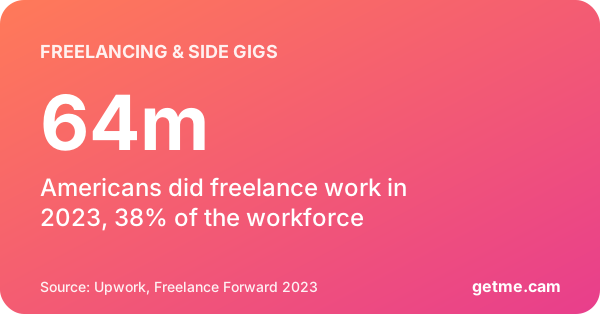
Freelancing has moved from the edges of the workforce to the mainstream. Upwork's Freelance Forward 2023 study estimated that 64 million Americans did freelance work in the previous year, about 38% of the US workforce. Not all of them freelance full-time: many combine a job with side work, or freelance between roles. Similar trends are visible in Australia, the UK, Canada and Europe, driven by remote work, online platforms and people wanting more control over how and when they work.
A side gig can be anything from tutoring two evenings a week, to dog walking, to design work for local businesses, to weekend handyperson jobs. Freelancing full-time means running a small business: finding clients, pricing, delivering work, invoicing, managing tax and looking after yourself without an employer's safety net.
This guide covers how to choose what to offer, find your first clients, set prices, write proposals and contracts, get paid, handle tax basics and protect your wellbeing. It also covers the risks, including scams aimed at freelancers, so you can grow a side income without nasty surprises.
Is freelancing right for you?
Freelancing offers freedom, variety and the potential to earn more per hour than in a job. It also brings uncertainty, admin and isolation. Ask yourself:
- Can you handle irregular income? Most freelancers have busy and quiet months. A savings buffer helps.
- Are you comfortable selling yourself? Finding clients is part of the job.
- Can you manage your own time without a manager setting deadlines?
- Do you have skills people will pay for, and can you deliver reliably?
- What do you need to give up? Paid leave, employer pension contributions and sick pay usually don't come with freelancing.
Starting as a side gig while keeping your job is a low-risk way to find out. Check your employment contract for any restrictions on outside work or conflicts of interest first.
Choosing what to offer
The best side gigs combine three things: something you're good at, something people need and will pay for, and something you enjoy enough to keep doing.
Local services
These are in steady demand and can be started quickly:
- Cleaning, gardening and handyperson work.
- Pet sitting and dog walking.
- Tutoring and music lessons.
- Removals help and furniture assembly.
- Personal training, yoga or fitness classes.
- Photography for events, families and small businesses.
- Hair, beauty and wellness (check local licensing).
Local services benefit from being visible to people nearby. On getme, a provider profile shows up for people in your area first, for example tutoring or cleaning in your city.
Skilled and remote work
- Writing, editing and translation.
- Design, illustration and video editing.
- Web development and IT support.
- Bookkeeping and virtual assistance.
- Marketing, social media and consulting.
These can be done for clients anywhere, which widens your market but also your competition. Specialising in a niche (say, websites for physiotherapists, or bookkeeping for tradespeople) makes it easier to stand out.
Trades
Qualified tradespeople can often build a strong freelance or sole-trader business. Licensing, insurance and safety rules matter here; see our hiring tradespeople guide for what clients will check.
Setting up properly
A little set-up early saves a lot of pain later.
- Business registration. Depending on your country and income, you may need to register as a sole trader or self-employed person, get a business number, or register for sales tax such as GST or VAT once you pass a threshold. Our country pages link to the official business register, for example the Netherlands or Denmark.
- A separate bank account. It makes bookkeeping and tax far easier.
- Insurance. Public liability insurance for work in people's homes or with equipment; professional indemnity for advice-based work.
- Licences and checks. Some work requires them, such as working-with-children checks for tutoring, or trade licences.
- Simple records. A spreadsheet or bookkeeping app for income, expenses and receipts.
Finding your first clients
Start with people who know you
Tell friends, family, former colleagues and your community what you're offering. Your first clients often come from your existing network, and their reviews and referrals help you win the next ones.
Show your work
A simple portfolio or profile with examples, clear services and prices (or starting prices) makes it easy for people to say yes. On getme you can add a "Hire me on getme" badge to your website or email signature.
Be visible locally
Local noticeboards, community groups, classifieds and local platforms all help. Sponsoring a local sports team or offering a workshop at a library can build a reputation fast.
Use platforms wisely
Freelance marketplaces can be a good source of early work, but fees and competition can be high. Use them to build experience and reviews, then aim to move repeat clients to direct relationships, within the platform's rules.
Ask for referrals
When a client is happy, ask whether they know anyone else who might need your help. Most people are glad to recommend someone good.
Pricing your work
Pricing is one of the hardest parts of freelancing. Too low and you'll be busy but broke; too high and you'll struggle to win work early on.
Work out your minimum
Start with what you need to earn in a year, add costs (equipment, software, insurance, travel, tax) and allow for unpaid time: admin, marketing, quiet periods and holidays. Many freelancers can bill only half to two-thirds of their working hours. Divide by realistic billable hours to find a minimum hourly rate.
Check the market
Look at what others with similar experience charge in your area or niche. Our price guide shows typical ranges for common services in Australian cities as a starting point.
Choose a pricing model
- Hourly is simple and fair for uncertain work.
- Day rates suit consulting and on-site work.
- Fixed project prices reward efficiency and are easier for clients to approve, but need a clear scope.
- Retainers give you regular income for ongoing work.
Raise prices over time
As your skills, reviews and demand grow, raise your rates, typically for new clients first and then for existing ones with notice.
Proposals, quotes and contracts
Write clear proposals
A good proposal restates the client's problem, explains what you'll do, lists deliverables, gives a timeline and price, and explains what happens next. Keep it short and specific.
Use a simple contract
Even for small jobs, put the key terms in writing:
- Scope of work and deliverables.
- Price, payment schedule and late-payment terms.
- Timeline and what happens if either side causes delays.
- Number of revisions included.
- Who owns the work and when ownership transfers (often on full payment).
- Cancellation terms.
- Confidentiality if needed.
Manage scope creep
Clients often ask for "just one more small thing". Be friendly but clear: "Happy to do that. It's outside our original scope, so it would be an extra [amount]. Shall I go ahead?"
Getting paid
- Ask for a deposit on larger projects, especially with new clients.
- Invoice promptly with clear details: your business details, invoice number, date, description, amount, tax if applicable, payment terms and how to pay.
- Set payment terms, for example 7 or 14 days.
- Follow up politely when payments are late, and escalate firmly if needed.
- Use traceable payment methods. Avoid unusual methods a client insists on.
Some countries have laws on late payment for business-to-business transactions that allow interest or compensation. Check your local rules.
Tax basics
Tax rules vary a lot by country, so take this as a general overview and check with your tax authority or an accountant.
- Income tax. Freelance income is usually taxable. You may need to file a self-assessment or business schedule.
- Set money aside. Many freelancers put aside a fixed percentage of every payment for tax.
- Sales taxes. You may need to register for GST, VAT or similar once you pass a turnover threshold.
- Expenses. Business expenses can often be deducted, so keep receipts.
- Social contributions and pensions. Self-employed people often need to arrange their own contributions.
- Platform reporting. In many countries, digital platforms now report sellers' income to tax authorities, so declare everything.
Tools that make freelancing easier
You don't need expensive software to start. A few simple tools cover most needs:
- Calendar and booking. A shared calendar or a simple booking link avoids back-and-forth about times.
- Invoicing and bookkeeping. Many accounting apps have free or low-cost tiers for sole traders and can produce invoices, track expenses and estimate tax.
- Contracts and proposals. A reusable template you adapt for each client saves hours.
- File storage and backups. Keep client work backed up in at least two places.
- Time tracking, if you bill hourly or want to understand where your time goes.
- A professional email address and profile. It doesn't need to be fancy, just consistent.
Review your tools once a year. Subscriptions add up, and some you signed up for in a busy month may no longer earn their keep.
Avoiding freelancer scams
Freelancers are targeted by scams too. Watch for:
- Overpayment scams. A client "accidentally" pays too much and asks you to refund the difference. Their original payment later bounces.
- Fake job offers that ask you to pay for training, software or "verification".
- Unpaid test work that's actually the full project.
- Requests to communicate off-platform immediately, especially by messaging apps, with vague details.
- Clients who refuse a contract or deposit on large jobs.
- Phishing disguised as payment notifications.
Verify new clients, use contracts and deposits, and don't send money to anyone as part of a job.
Building a reputation
Reputation is a freelancer's most valuable asset, and it compounds.
- Deliver on time, every time. Reliability is rarer than talent and clients remember it.
- Communicate early. If something will be late, say so before the deadline, with a new date.
- Ask for reviews when a job goes well, and make it easy with a direct link. Never buy, swap or fake reviews; platforms and regulators increasingly penalise it, and it damages trust when discovered.
- Show your process. Before-and-after photos, short case studies and testimonials (with permission) help new clients understand what you do.
- Keep a simple client list and check in with past clients every few months. Repeat work is the cheapest work to win.
Handling difficult clients
Most clients are reasonable, but a few will test your patience.
- Clarify expectations upfront. Many conflicts come from unclear scope or deadlines.
- Stay calm and written. Respond to complaints in writing, acknowledge the issue, and propose a fix.
- Refer back to the agreement. A clear contract makes disputes about scope much easier to resolve.
- Know when to walk away. If a client is abusive, refuses to pay, or keeps changing the brief without paying for it, it's OK to finish what's agreed, invoice, and decline further work.
- Protect your safety. If you visit clients' homes, tell someone where you're going, and leave if you feel unsafe.
Side gigs for students and parents
Side gigs can fit around study and family when they're chosen well.
- Students: tutoring younger students, hospitality shifts, campus jobs, design or social media work for local businesses, and pet sitting all fit around timetables. If you're an international student, check your visa conditions for limits on working hours.
- Parents: school-hours work such as bookkeeping, virtual assistance, cleaning or tutoring, and evening or weekend work when a partner or family can help. Be realistic about how many hours you can commit reliably.
Learning to say no
Early on, it's tempting to take every job. Over time, saying no to poorly paid, badly scoped or stressful work frees up time for better clients. A polite template helps: "Thanks for thinking of me. I'm not able to take this on, but I hope it goes well." If you can, refer them to someone else; it builds goodwill on all sides.
Looking after yourself
Freelancing can be lonely and hard to switch off from.
- Set working hours and stick to them most of the time.
- Build in time off, and price your work to allow for it.
- Connect with others: co-working spaces, local business groups and freelancer meetups. Our making friends guide has ideas.
- Plan for quiet periods with a savings buffer of a few months' expenses.
- Protect your health: a good chair, breaks, and getting outside.
A first-month plan for a side gig
- Week 1: Choose one service, define who it's for, and set a starting price using the method above. Check whether you need to register, and open a separate account.
- Week 2: Create a simple profile with examples, clear services and how to book. On getme, use the worker template and add your service area.
- Week 3: Tell your network, post on local boards, and offer a limited introductory rate to your first two or three clients in exchange for honest reviews.
- Week 4: Deliver brilliantly, ask for reviews and referrals, and review what you've learned about pricing and time.
Growing from side gig to business
If your side gig grows, you may want to make it your main work. Signs it's time: steady demand, a pipeline of clients, savings to cover a slow start, and a clear idea of how you'll find new work. Consider whether to stay a sole trader or set up a company, whether to hire help, and how to systematise your work so you're not trading every hour for money.
Frequently asked questions
Do I need to register a business to freelance?
It depends on your country and income. Many places require you to register as self-employed or a sole trader and to get a business or tax number. Check your country's official business register.
How much should I charge?
Calculate your minimum from income needs, costs and realistic billable hours, then compare with the local market. Raise prices as demand grows.
Can I freelance while employed?
Usually, yes, but check your employment contract for restrictions and avoid conflicts of interest.
How do I find my first client?
Start with your network, show examples of your work, be visible locally, and ask happy clients for referrals.
How do I avoid not getting paid?
Use a written agreement, take deposits on larger jobs, invoice promptly with clear terms, and follow up firmly on late payments.
What insurance do I need?
Public liability for work in homes or with equipment, and professional indemnity for advice or design work. Requirements vary by country and trade.
How do I deal with a client who won't pay?
Send a polite reminder with the invoice attached, then a firmer notice with a deadline. If that fails, many countries have small-claims processes for modest amounts, and some allow interest on late business payments.
Should I work for free to build a portfolio?
Usually not for businesses that can pay. If you want examples, consider personal projects, a small number of discounted jobs for community groups or charities, or a clearly limited introductory rate. Free work tends to attract clients who don't value it and makes later pricing harder.
How many clients should I aim for?
Having several clients rather than one big one reduces risk: losing a single client won't wipe out your income. Many freelancers aim for no single client making up more than about half of their earnings.
Related pages
More guides
Use this stat
Source: Upwork, Freelance Forward 2023. Free to embed with the credit link.